Using Women's Experiences as a Source of Knowledge, Moh. Faiz Maulana Earns Doctorate in Anthropology from UI

Humas Unusia
Content Writer
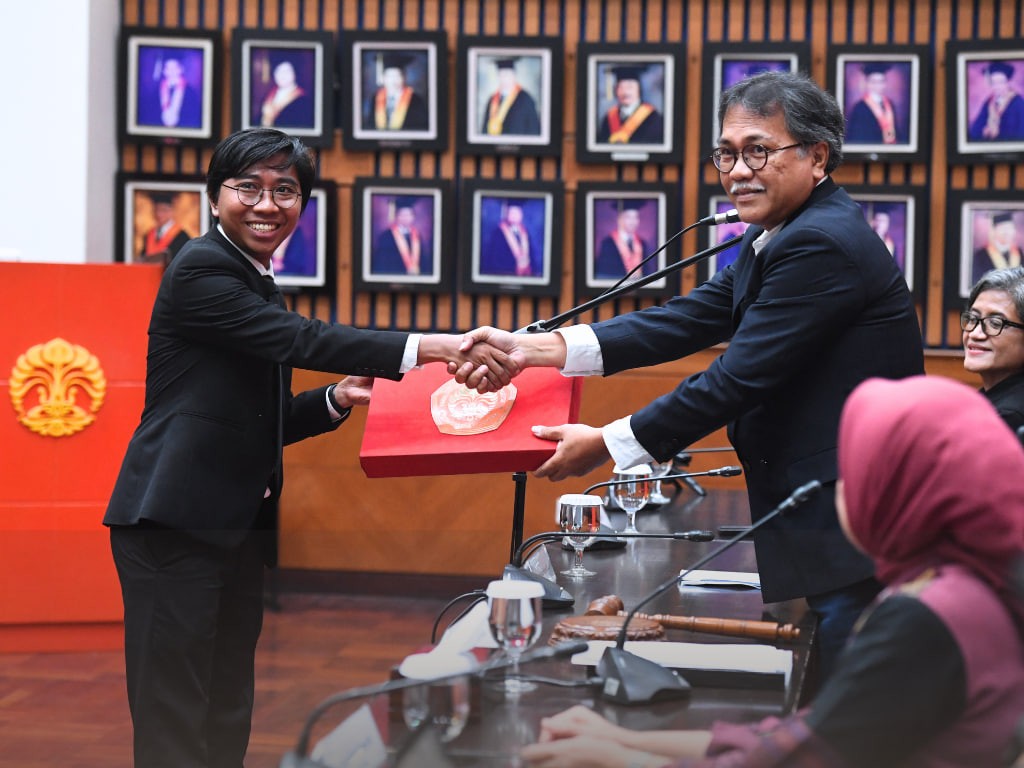
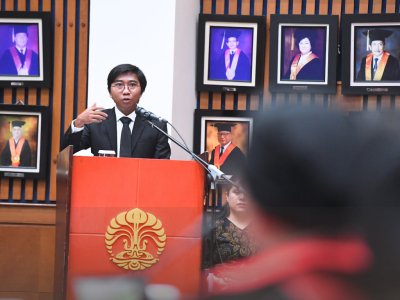
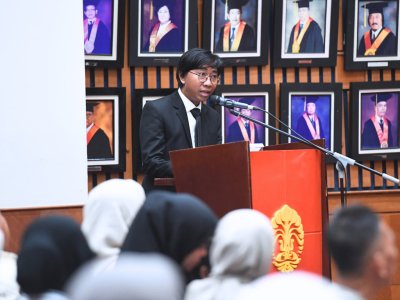
Depok – Moh. Faiz Maulana, a lecturer in the Sociology Study Program at Unusia University, officially completed his doctoral studies at the Faculty of Social and Political Sciences (FISIP) at the University of Indonesia during the Academic Senate Open Session held on Monday (July 20) at the Juwono Sudarsono Auditorium (AJS), FISIP UI Campus, Depok. He successfully defended his doctoral dissertation and was declared a Highly Satisfactory Graduate.
His dissertation was titled "Telling Experiences, Writing Knowledge: Epistemic Disobedience and Feminist Knowledge Production in the Puan Menulis Community." Through this research, he explored the writing practices of women in the Puan Menulis community as an effort to present a new perspective on viewing women's experiences as a source of knowledge. He believes that experiences, often considered personal matters, actually have academic value and can provide new perspectives on understanding social life.
Using a feminist digital ethnography approach, Faiz conducted participant observation, in-depth interviews, analysis of online discussions, and a review of various written works by community members. This approach was used to understand how women's experiences are produced, interpreted, and articulated into knowledge through digital spaces such as WhatsApp, Instagram, and Zoom.
The research findings indicate that writing practices in the Puan Menulis community are not merely literacy activities, but rather social practices that enable women to transform experiences about their bodies, families, domestic work, mental health, social relations, and various forms of gender injustice into collective knowledge. Through the process of sharing stories, reading each other, discussing, and providing feedback, experiences that were initially individual develop into broader social reflections on power relations and women's lives.
In her presentation, Faiz explained that if women's experiences are simply stored away, they cease to be individual. Conversely, when these experiences are written down, read, and discussed, they develop into a collective consciousness that enriches understanding of social life. According to her, writing is not only understood as an activity that produces knowledge, but also as a social practice that builds a space for sharing experiences and fosters solidarity among women.
The findings of this research enrich the study of the anthropology of knowledge, feminist anthropology, and the anthropology of writing by demonstrating that women's experiences are not only objects of research but also sources of knowledge capable of providing a more reflective and equitable social understanding. This research also opens up space for the experiences of groups that have previously received little attention to be recognized as part of the tradition of knowledge production.
Concluding his presentation, Faiz emphasized that every experience has value as knowledge and deserves recognition in the development of science.
"There is no dominant knowledge, but everything we encounter is knowledge," Faiz emphasized.
The doctoral promotion defense was supervised by Irwan Martua Hidayana, Ph.D., as promoter, and Prof. Dr. Widjajanti M. Santoso, M.Litt., as co-promoter. Faiz's achievement is a source of pride for Unusia and reinforces the institution's commitment to encouraging lecturers to produce research that contributes to the development of science and the advancement of society.