Elis Lisyawati Earns Doctor of Education Degree for Embracing the McKinsey 7S Framework for Inclusive Education

Humas Unusia
Content Writer
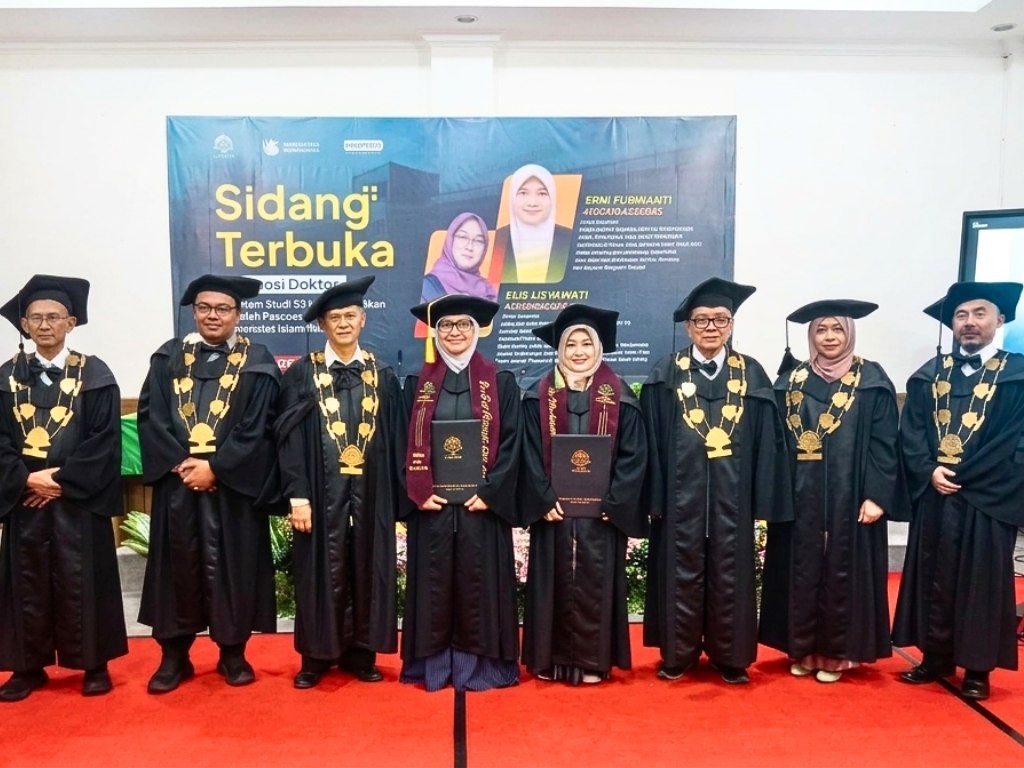
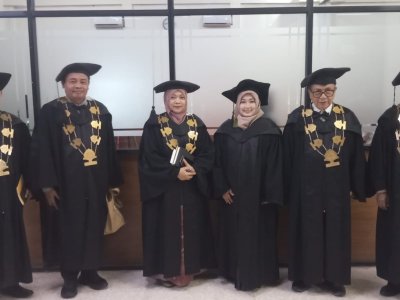
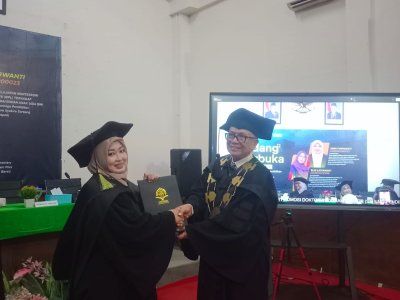
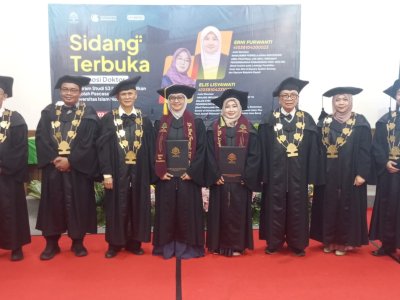
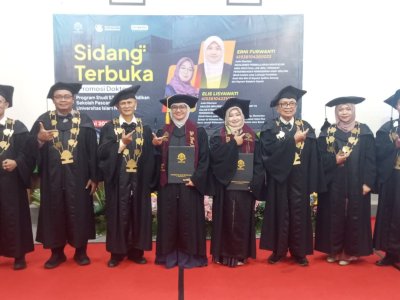
Bandung – Elis Lisyawati officially earned her Doctor of Education degree after attending the Open Doctoral Promotion Defense for the Doctoral Program (S3) in Educational Sciences at the Graduate School of Nusantara Islamic University (UNINUS) on Wednesday (June 17th). The defense, held in the UNINUS Postgraduate Hall, was chaired by Prof. Dr. H. Hanafiah, M.M.Pd., and was attended by a team of promoters and examiners from academia.
During the defense, Elis defended her dissertation, entitled "Analysis of the Implementation of the McKinsey 7S Framework in Principal Strategies for Improving the Quality of Inclusive Education." The research was a case study conducted at Madania Elementary School in Parung, Elementary School of Universe (SOU) in Parung, and Daarul Jannah Plus Islamic Elementary School in Pakansari, Bogor Regency.
This research arose from the persistent gap between inclusive education policy and implementation in Indonesia. Using a qualitative approach, Elis analyzed how school principals align the seven organizational elements within the McKinsey 7S framework—strategy, structure, systems, staff, skills, style, and shared values—to improve the quality of inclusive education services.
Her research findings indicate that the success of inclusive education is not solely determined by the availability of resources or policies, but rather by the alignment of all elements of the school organization. The principal's transformational leadership, the empowerment of educators, an inclusive school culture, and collaboration with various stakeholders are crucial factors in creating adaptive and sustainable education services.
As a novelty, Elis introduced the B.E.R.K.A.H. (Balanced, Empathetic, Responsive, Knowledge-driven, Accountable, and Humanistic) Model. This model integrates the McKinsey 7S framework with transformational leadership and humanistic-spiritual values as an implementable strategy for school principals to improve the quality of inclusive education. The model is expected to bridge the gap between education policy and practice.
This doctoral defense was supervised by Prof. Dr. H. Iim Wasliman, M.Pd., M.Si., as Promoter, accompanied by Dr. H. R. Supyan Sauri, M.M.Pd., as Co-Promoter, and Dr. Abdul Holik, M.M.Pd., as a member of the promoter team. Meanwhile, Dr. Helmawati, M.Pd.I., served as internal examiner, and Dr. Abdul Mukti Ro'uf, M.A., as external examiner.
Elis Lisyawati's success in earning her doctorate also enriches the body of research in the field of educational management, particularly regarding school leadership strategies for realizing quality inclusive education. The findings of this study are expected to serve as a reference for school principals, policymakers, and education practitioners in developing more adaptive, collaborative school governance that is oriented toward fulfilling the learning rights of all students.